|
Don't miss these
BRUSH-FOOTED BUTTERFLIES
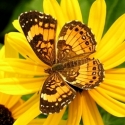
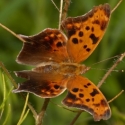
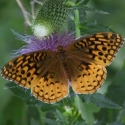
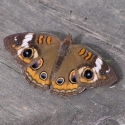
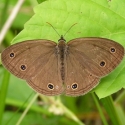
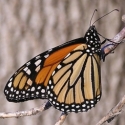
The Brush-footed Butterflies family (Nymphalidae) is the largest with about� 6,000 species worldwide and about 200 in North America.� The unique characteristic of the family is that, although they technically have 6 legs, they use only 4 for walking or hanging. The front pair of legs has been shortened into 2 small “brushes.”� The family is varied and has been split into several subfamilies. � � The Fritillaries (subfamily Heliconiinae) are brightly colored and many of the larvae feed on passion vine or violets.� The True Brushfoots, subfamily Nymphalinae, includes many species such as the Crescents and Checkerspots which look like small, colorful fritillaries.� The larvae feed on many plants especially sunflowers.� Also in this subfamily are Anglewings, Ladies and Buckeyes.� The Admirals (Limenitidinae) include large colorful species like Red-spotted Purple and the Viceroy.� Emperors (Apaturinae) and the Snout (Libytheinae) are all associated with Hackberry Trees, the host plant for the larvae.� The adults prefer sap and rotting fruit and rarely visit flowers.� The Satyrs (Satyrinae) are brown with eyespots on the wings.� Grasses and sedges are the larval host plants. � Milkweed Butterflies (Danaiinae) include the Monarch,� the most recognized butterfly in North America.� The adult feeds at milkweed flowers as well as other flowers, and its larvae feed on the foliage of milkweeds which makes them toxic to most predators. �Each fall it makes� its way south and spends the winter in the mountains of central Mexico. �The monarch is the only butterfly to migrate such long distances.� Disclaimer: The content of NatureSearch is provided by dedicated volunteer Naturalists of Fontenelle Nature Association who strive to provide the most accurate information available. Contributors of the images retain their copyrights. The point of contact for this page is: Babs Padelford. |
||||||||||
|
||||||||||